
Forecast accuracy assessment guide. How to evaluate your forecasts?
Evaluating forecast accuracy is crucial for reliable business decisions. Metrics like MAE, SMAPE, MASE, and RMSE help measure prediction errors, while assessing bias and combining multiple indicators ensures forecasts align with operational goals and provide actionable insights.
Understanding time series forecasting: 10 models and tools
Article reviews ten key time series forecasting models and tools—from classical methods like ARIMA and exponential smoothing to machine‑learning approaches such as XGBoost, LGBM, and neural networks—helping readers choose appropriate techniques for accurate future predictions
New whitepaper released: we break down Demand Forecasting
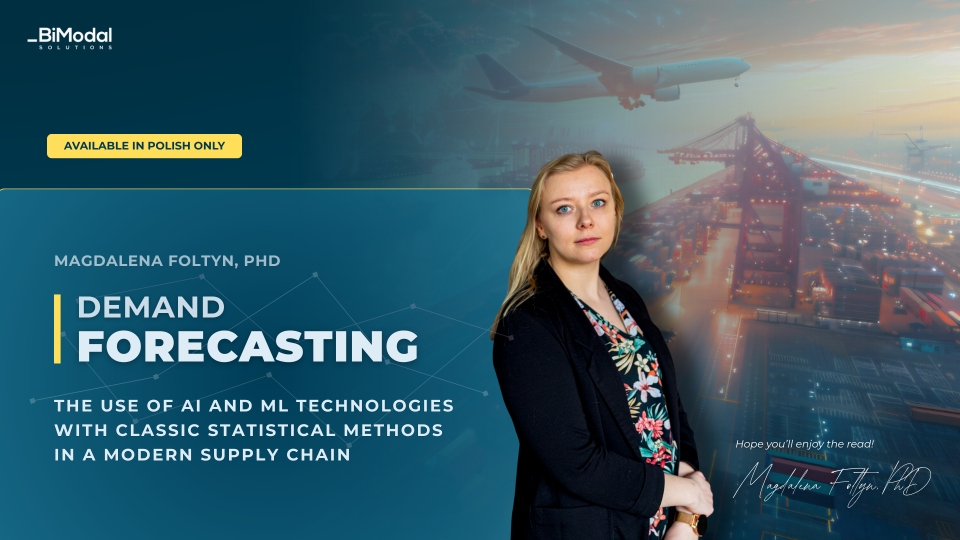
We would like to announce the launch of our latest whitepaper: Prognozowanie popytu: Wykorzystanie technologii AI i ML z klasycznymi metodami statystycznymi w nowoczesnym łańcuchu dostaw written by our in-house expert, Magdalena Foltyn, PhD.
Digital Supply Chain Meetup #1 – conclusions, reflections, and… next steps?

“We had been thinking about this initiative for a good few years. We made our first attempt at the end of 2019, with huge plans for 2020. We all know what messed up those plans. But now we have a fresh start, a second beginning, which has definitely been a success.”
Demand Forecasting Best Practices: How to Prepare Your Datasets for Forecasts
To successfully predict demand, it is necessary to comprehend and prepare historical data. By “comprehending”, I mean learning about data features (both business and quantitative). “Preparation” involves adjusting the data according to these features, which consists of cleansing the data of anomalies. Anomalies are events that deviate from the general pattern of data for a specific period.
Demand Forecasting methods: how to predict sales?
In every business, effective demand planning relies on making informed predictions about the future. The more information we have, the more accurate these predictions can be. We engage in this type of forecasting daily through routine tasks, such as shopping or fueling our cars.
AI and production – examples of use across various industries
In the era of rapidly developing artificial intelligence (AI), we often overlook the specific ways it can assist us. Sometimes, in the race to adopt trends, we implement AI without considering its true implications. Meanwhile, awareness of the capabilities of AI algorithms translates into the potential to enhance work efficiency in every aspect of a business, supporting humans in their day-to-day tasks.
Artificial Intelligence in action. Is AI… intelligent?
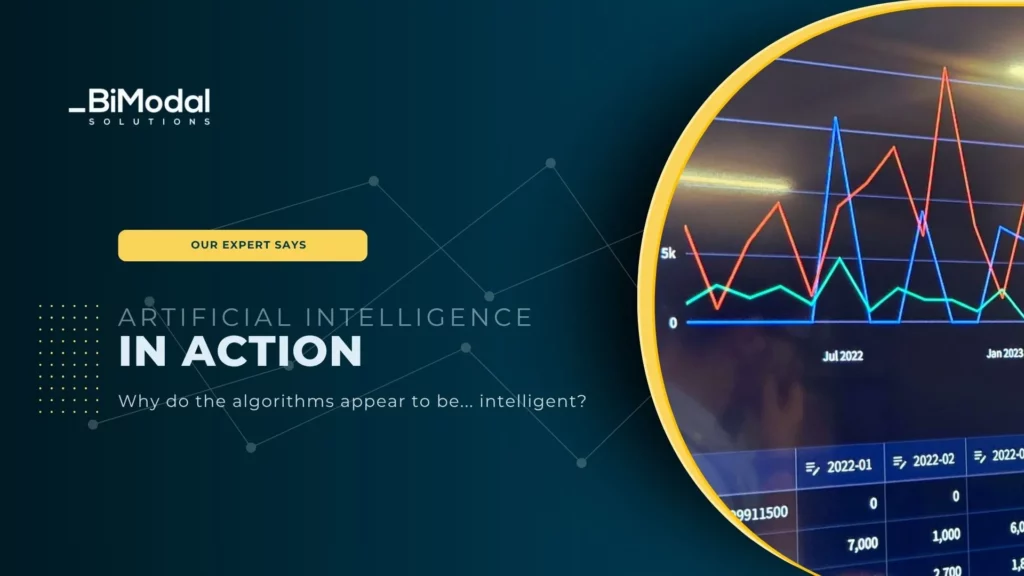
The technologies that rely on machine learning are ubiquitous in both business and daily life. While using them, we may get the impression that such systems have the capability of thinking like humans. However, the reality is quite different. Artificial intelligence does not possess such competence. Although such tools may help with data analytics, business decision-making, or process automation, they […]
ML & AI in business: definitions and model training methods
It is safe to say that AI has already become a permanent fixture in our daily lives and business. We almost instinctively reach for it to facilitate the repetitive, mundane tasks. This technology offers the precision of predictive analytics and the efficacy of information processing unparalleled by any alternative method.