Author: Dr. Katarzyna Styk, Product Owner, BiModal Solutions
“We had been thinking about this initiative for a good few years. We made our first attempt at the end of 2019, with huge plans for 2020. We all know what messed up those plans. But now we have a fresh start, a second beginning, which has definitely been a success.”
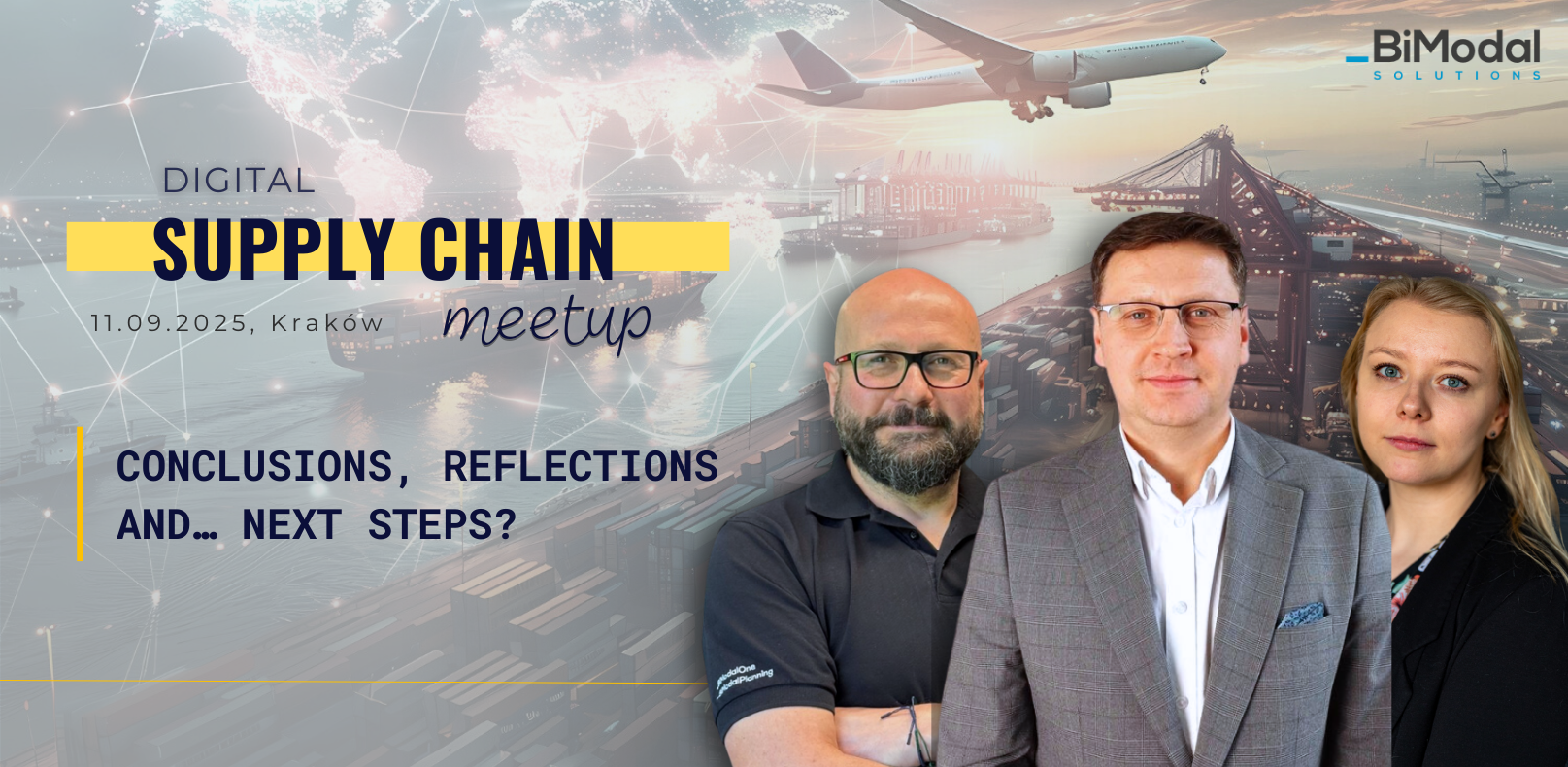
With such words, Artur Buła opened the Digital Supply Chain Meetup, an event organized by BiModal Solutions at the beginning of September (September 11th). Behind these words lies a particular guiding principle—these “fresh starts” are laying the foundation for a bigger, innovative initiative.
This initiative—the Digital Supply Chain Society—is a project that has a real chance to change how we, as specialists, experts, and academics, share knowledge about how supply chains work. Read on to find out what the first meetup in this series looked like and what we have in store for you in the future.
Paweł Strzelecki: “The Role of Orders in Supply Chain Management”
The first Digital Supply Chain Meetup was opened by our special guest, Paweł Strzelecki. His presentation, which at times turned into a lively discussion, addressed the topic of customer order management, discussing practical challenges, the differences between orders and forecasts, and ways to deal with uncertainty and the specifics of various markets.
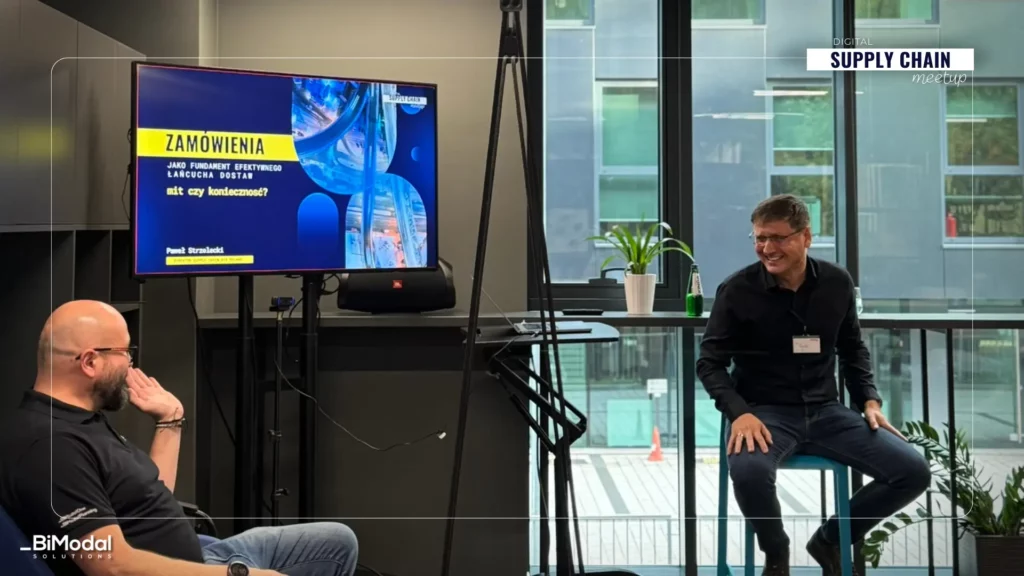
Here are the main conclusions from the presentation:
An order, or… not really?
When we think of an order, we associate it with a contract, a commitment, or a customer’s need that should be the basis for production planning. However, this is not always the case. Orders are often not fully reliable and can sometimes be treated as reservations or part of a negotiation game. We called such orders ‘speculative’.
Markets and their unique specifics
Every planner knows—or at least should know—that some markets, well… are governed according to their very own guidelines. Because of this, they require an individual approach. In such a situation, it is extremely important to observe markets, look for dependencies, and try to determine the “universal rules” characteristic of a given market.
Know your customer…
The same principle applies to customers. They can differ from one another due to their sales methods or the approach of their planning teams. By observing a customer’s behavior and their subsequent orders, it becomes possible to “behaviorally understand” them and include this in the planning process, which is especially important for long lead times.
Trust and control
During the discussion, we talked about various ways to better control orders. Among them were suggestions such as time limits for order pickup or closing orders that are not confirmed by the customer within a certain period. Above all, the importance of transparency, inter-departmental cooperation, and the analysis of historical data was emphasized.
The superpowers of planning specialists
Paweł described cases where the analysis of orders allowed for margin optimization and better production management in situations of limited production capacity. He pointed out that a planner can inspire the organization from the ground up to change its approach to orders and better use information flowing from the market.

What’s more important: order or demand?
The answer to this question, and the motto of this part of the first Digital Supply Chain Meetup, is: “The order is more important than demand.” The following anecdote perfectly illustrates this:
- Imagine we have a client, A, who in week 20 orders 100 units of a product.
- The supplier does not confirm the possibility of delivery.
- In the next week (wk21), the client orders 200 units and again does not receive confirmation.
- In the third attempt (wk22), they ordered 300 units.
- They receive confirmation.
If, in this situation, we were to look at demand, the prediction for wk23 and wk24 would be 400 and 500 units, respectively.
However, this would not be true.
If we know the client, we know that their orders are a steady 100 units/wk. So if they didn’t receive confirmation, they tried to supplement their warehouses or secure a safety stock.
Therefore, an appeal was made: let’s nurture relationships with customers, get to know each other, and observe behaviors. Thanks to this, we will know how to treat individual orders, and planning will become effective and reliable.

Moderated Discussion. Are we ready for AI in Supply Chain?
Artificial intelligence has been a continuous trend and a main topic of conversation in the context of supply chains for many months. It could not, therefore, be absent from the first edition of the Digital Supply Chain Meetup. We decided that this time we would take on a slightly different role, and instead of a presentation, our CEO, Artur, along with our business data analysis specialist, Magdalena Foltyn, PhD, would lead a more free-flowing, moderated discussion among specialists.
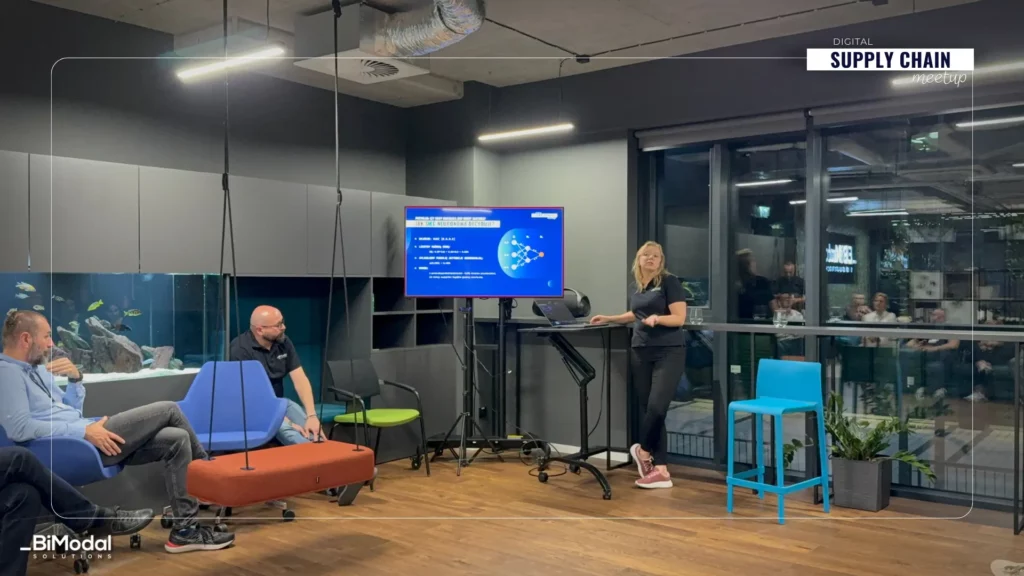
As it turns out, this conversation yielded very interesting conclusions! Here are some of them:
The anatomy of AI
Magda briefly discussed the structure of artificial intelligence neurons, analogous to their biological counterparts. She also presented guests with the mechanisms of machine learning, weights, activation functions, and the importance of training data. This last topic is particularly important because the effectiveness of AI-based solutions will depend on the quality of the data.
Artificial intelligence in action!
After a brief dose of theory, it was time for practice. We used an uncomplicated neural network as an example, whose task was to assess a supplier’s reliability based on several input parameters. The experiment was a success, highlighting the importance of two key elements:
- the quality and diversity of the data,
- and the appropriate, careful preparation of the learning models.
There are opportunities… but what about the threats?
AI has become such a dominant topic for a reason. However, looking only at the bright sides of this technology comes with risks that not every company is able to take. Therefore, the next point of the conversation was the threats and pain points associated with AI: hallucinations of language models, misinformation, data security, and the sharing of internal information with publicly available AI models.
Supply chain problems
Attempts to implement artificial intelligence very often reveal another problem characteristic of this field: the lack of properly organized and rich data. It is data from various sources—documents, emails, recordings, meetings, or even… production sensors—that allows AI to work truly effectively and properly optimize processes across the entire supply chain. That’s why it’s worth collecting it systematically and experimenting with new tools—and, who knows, maybe we’ll hit on a breakthrough solution?
AI in logistics and production
This was one of the most interesting points on the agenda. Along with our guests, we presented examples of using AI in the logistics and production industries. And there were quite a few: from production scheduling—of which our latest addition to the portfolio, BiModal Scheduler, is an example—to transport tracking via TMS or a digital twin, prediction of operational events, or analysis of product manufacturing costs. So, as you can see, there are quite a few solutions.
So what should be the deciding factor when choosing to purchase such a system? The conclusion was that the key is to adapt the model to the specifics of both the company and the entire market landscape.

How to Build Business Transparency
The supply chain cannot function without trust—and a good leader can build that trust through effective communication. This was the conclusion shared by both the discussion moderators—Artur and Magda—as well as the special guest of the meeting, Paweł.
The participants unanimously confirmed that effective planning is closely dependent on a constant exchange of information, transparency of business processes, and a continuous flow of complete data. In this context, they also pointed out specific challenges and the results of neglecting this topic: excess inventory, loss of demand, and difficulties in fulfilling orders.

The DIGITAL SUPPLY CHAIN SOCIETY Initiative: Is There a Place for It in the Planner Community?
Regular meetings, sharing experiences, and jointly solving problems affecting the supply chain industry—this is the idea behind the Digital Supply Chain Society initiative. Artur and Paweł briefly presented this idea, drawing attention to a very important issue from the perspective of this field: the lack of access to reliable sources of information.
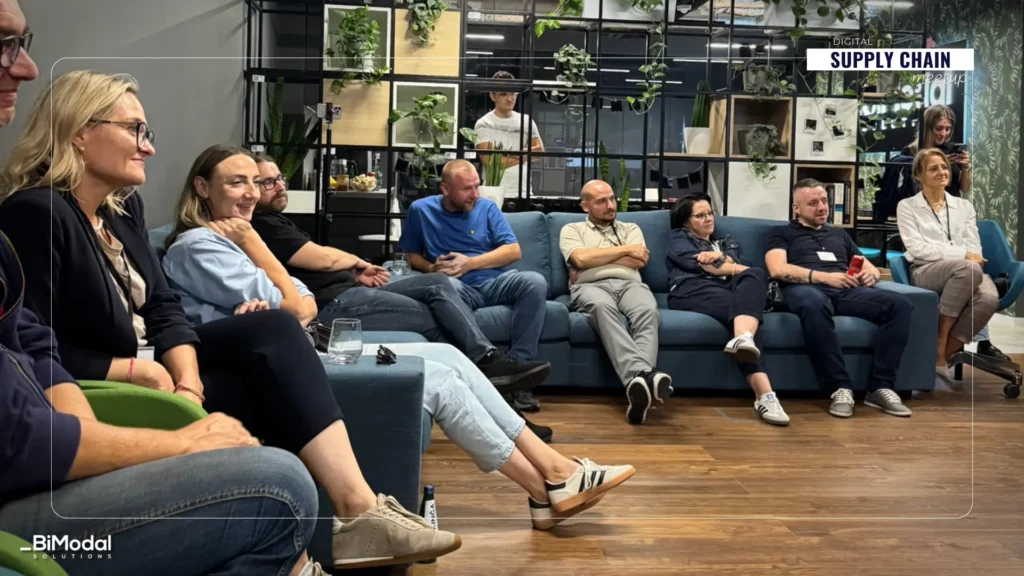
In a world where we have not only Google but also AI engines at our fingertips, accessing any amount of knowledge seems trivially easy. In practice, however, this knowledge is often incomplete and fragmented, and networking is laced with so much marketing fluff that it often loses its substantive value.
We see this problem and want to address it. That’s why we dusted off the idea for the Digital Supply Chain Society, which came up in our conversations with Paweł even before the pandemic.
In short: let’s meet. Let’s meet in different places—your workplaces, production companies, in Kraków, Warsaw, Poznań, and other places. Let’s talk in a relaxed atmosphere about real problems with real data and learn from each other.
The Digital Supply Chain Society is a completely grassroots and informal initiative. The topics of the meetings would, by definition, be open—from digitalization to the analog aspects of supply chain management. All participants would have complete freedom in both choosing the topic and the format of the meetings.

Digital Supply Chain Meetup: Are you in?
We can confidently say that the first meeting in the Digital Supply Chain Meetup series was a success—and much bigger than we anticipated! Although only a few weeks have passed, we are eagerly awaiting the next meeting—this time with more of a workshop feel.
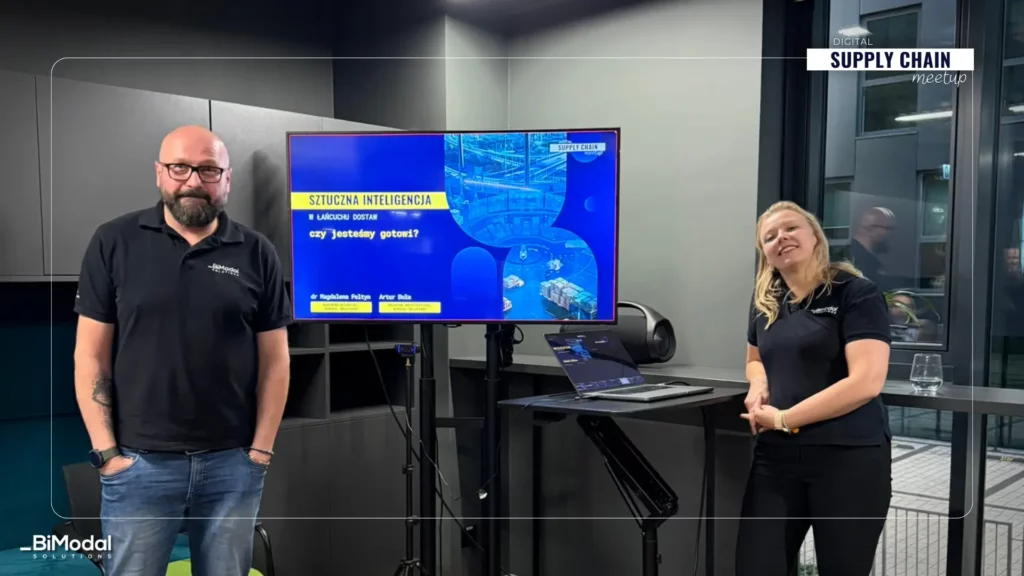
Do you have an idea for a topic for such a meeting? Or maybe you want to share your thoughts on the topics we raised during the first edition of the meetup? We are waiting for your comments and feedback!